An Ironman’s first real wall is usually travel and money: getting around the map and paying for things without the Grand Exchange, long before any boss gets in the way. The route below covers Old School RuneScape as of November 2026. It starts with choosing a mode, places Sailing and The Fractured Archive inside the main progression, and marks the milestones that matter on the way to Barrows gloves, Song of the Elves and raids.
Key takeaways
- You choose Ironman, Hardcore, Ultimate or Group on Tutorial Island. A normal account can never become an Ironman later.
- Hardcore Worlds (launched 4 November 2026) is not an Ironman mode. It allows trading and uses the stricter Hardcore Group Ironman death rules.
- Do the first Sailing quests early. Prying Times at Sailing 12 and salvaging at 15 give you travel, run energy and AFK income.
- Barrows gloves through Recipe for Disaster is the main early-to-mid milestone. Song of the Elves and the Corrupted Gauntlet come next.
- The Fractured Archive needs While Guthix Sleeps, and deaths there are not safe for Hardcore Ironmen.
Fact-checked
We checked these key facts against the sources named, on November 14, 2026:
- The skill gates that slow Irons most are 70 Cooking and 48 Agility for the King Awowogei subquest, and the quest list includes Desert Treasure I, Monkey Madness I and Horror from the Deep (source: oldschool.runescape.wiki)
- The most valuable ones for an Iron are those that open travel or skip grinds. – Fairytale II (partial): starting it gives fairy ring access with a dramen staff from Lost City (source: oldschool.runescape.wiki)
- Treat new content as dangerous. When Sailing launched, Jagex advised players to avoid high-risk activity, including Hardcore Ironman play, while it watched for technical problems (source: osrs.runescape.com)
- Wintertodt, Sailing, fairy rings and almost everything below are members-only. – RuneLite with Quest Helper, or the official client plus a quest guide open in another window. – A Jagex Account (source: oldschool.runescape.wiki)
OSRS Ironman Guide (November 2026): The Short Version
In short: pick your mode before you leave Tutorial Island, follow one community route instead of mixing several, start Sailing early for travel and money, aim at Barrows gloves, then work through Song of the Elves, the Corrupted Gauntlet and the raids. The table below covers the whole account in four phases, and you can read it in about two minutes.
The order follows a simple rule that every popular Ironman route shares. First unlock the things that make everything else faster (run energy, teleports, money, food, prayer). Then unlock the things that make combat possible. An Ironman who rushes bosses without fairy rings, karambwans and 43 Prayer pays for it in slow trips and deaths.
Ironman Milestone Checklist by Phase
| Phase | Milestone | Source / unlock | Key requirement |
|---|---|---|---|
| 1: First 10 hours | 10,000 coins and boots | Stronghold of Security | None, done on foot |
| 1 | Rogue’s outfit | Rogues’ Den maze | 50 Thieving, 50 Agility |
| 1 | Supply crates, Firemaking XP | Wintertodt | 50 Firemaking |
| 1 | Fairy rings | Fairytale II (partial) | Lost City for the dramen staff |
| 1 | Ardougne cloak 1 | Ardougne Easy Diary | Easy diary tasks |
| 1 | Crowbar for sea charting | Prying Times quest | Sailing 12, Smithing 30 |
| 2: Road to gloves | Protection prayers | Prayer training | 43 Prayer |
| 2 | Graceful outfit | Marks of grace, Rooftop Agility | 260 marks |
| 2 | Daily herbs and resources | Miscellania kingdom | Throne of Miscellania |
| 2 | Fire cape | TzHaar Fight Cave | 63 waves |
| 2 | Fighter torso | Barbarian Assault | Honour points in all four roles |
| 2 | Dragon defender | Warriors’ Guild | 130 combined Attack + Strength |
| 2 | Barrows gloves | Recipe for Disaster | 175 quest points, 70 Cooking |
| 3: Mid-game gear | Imbued god cape | Mage Arena II | 75 Magic |
| 3 | Barrows armour | Barrows | Priest in Peril |
| 3 | Perilous moon gear | Moons of Peril | Perilous Moons quest |
| 3 | Deadeye, Mystic vigour, Twinflame staff | Royal Titans | Combat stats in the 70s+ |
| 3 | Saradomin brews | Herblore | 81 Herblore |
| 4: Endgame entry | Prifddinas access | Song of the Elves | 70 in eight skills |
| 4 | Bow of Faerdhinen | Corrupted Gauntlet | Song of the Elves, 80 Ranged to wield |
| 4 | Raid uniques | CoX, ToA, ToB | Gear from phases 2-3 |
| 4 | Raids 4 access | The Fractured Archive | While Guthix Sleeps |
Pick Your Mode Before You Leave Tutorial Island

Ironman status is set on Tutorial Island through the Ironman tutor, and a normal account cannot become any kind of Ironman after it leaves. Choose your mode, and whether you want Hardcore, before you finish the tutorial. Moving down (Hardcore to regular, or removing Ironman status altogether) is possible later. Moving up never is.
The mode you choose shapes the whole account. A Hardcore Ironman gets a tradable bragging right and its own hiscores, but every early risk you take, from low-HP Wintertodt to a laggy boss kill, carries extra weight. An Ultimate Ironman gives up the bank entirely. Group Ironman lets you share with two to four friends, and how much that helps depends on how reliable those friends are.
Ironman restrictions at a glance
An Ironman cannot trade, use the Grand Exchange, receive Accept Aid spells, gain PvP XP or pick up other players’ drops. The OSRS Wiki’s Ironman guide lists one exception at the GE. You can buy Old School bonds there to pay for membership, but you can never sell them, so bonds cannot turn into gold.
Everything else has to come from your own account. You gather the food, fill the bank, collect the herbs and earn the coins for shop items and construction costs. In practice this means one skill keeps blocking another. Herblore needs Farming, Farming needs money for seeds, money needs Thieving or a boss, and the boss needs potions. Good Ironman routes exist to untangle that chain in the right order.
Did you know?
According to the OSRS Wiki’s Ironman guide, Ironmen can buy Old School bonds from the Grand Exchange but can never sell them, so membership is the only thing a bond can give an Iron.
Ironman Modes Compared (2026)
| Mode | Lives | Bank | Trading / GE | Death rule | Best for |
|---|---|---|---|---|---|
| Ironman | Unlimited | Normal bank | None (can buy bonds) | Standard death mechanics | Most first-time Irons |
| Hardcore Ironman | One “hardcore” life | Normal bank | None (can buy bonds) | A dangerous death reverts you to regular Ironman | Careful players who want stakes |
| Ultimate Ironman | Unlimited | No bank | None | Standard, but no bank to fall back on | Veterans who enjoy inventory puzzles |
| Group Ironman | Unlimited | Bank plus shared group storage | Trading only within the group | Standard death mechanics | Steady groups of 2-5 friends |
| Hardcore Group Ironman | Shared group lives | Bank plus shared group storage | Trading only within the group | Stricter rules; even safe-minigame deaths count | Organised groups who want risk |
| Hardcore Worlds (not Ironman) | One life | Normal bank | Trading and GE allowed, separate economy | Uses HCGIM death rules | A one-life challenge with an economy |
Hardcore Ironman: what counts as a dangerous death
A dangerous death is any death outside content the game treats as safe. On Hardcore Ironman it turns your account into a regular Ironman and freezes your Hardcore hiscores entry where it was. The OSRS Wiki confirms that deaths in safe minigames do not count against a Hardcore Ironman. Hardcore Group Ironman is the exception, because its safe-death rules are stricter.
Losing Hardcore status costs nothing except the status itself. The account, the bank and your progress all stay. That is why many players start as Hardcore Ironman even with no intention of staying careful forever. You get the stakes while they are fun, and if you die you simply carry on as a normal Iron with nothing lost.
Hardcore Worlds vs Hardcore Ironman (launched 4 November 2026)
Hardcore Worlds is not an Ironman mode, and mixing the two up is currently the most common mistake new players make. The OSRS Wiki describes it as a members-only, one-life set of 32 worlds with its own economy, open only to newly created characters. Osrstoolkit’s guide adds that you can trade and use the Grand Exchange there, and that it runs on Hardcore Group Ironman death rules.
That ruleset is harsher than standard Hardcore Ironman. Activities that are safe for an HCIM, such as Barbarian Assault, the Camelot Training Room, Chambers of Xeric and the Dream World fight in Lunar Diplomacy, count as unsafe on Hardcore Worlds. After a death you choose between resetting and transferring the character out, and items that would have gone to your gravestone are deleted. Shortly after launch, MMOHuts reported that Jagex patched an early gold-smuggling exploit tied to Tutorial Island. Exploits like that can get a fresh character banned, so play the mode as intended.
Did you know?
Osrstoolkit’s Hardcore Worlds guide points out that the one-life mode launched on 4 November 2026 is not an Ironman mode at all. You can trade and use the Grand Exchange, and it uses the stricter Hardcore Group Ironman death rules.
Group Ironman in brief
Group Ironman puts two to five players on a shared self-sufficiency rule. You can trade and share storage with each other, but with nobody outside the group. It suits new players well if the group plays on similar schedules, because one person farming herbs while another trains Smithing removes the worst early bottlenecks.
It suits new players badly if one member logs in twice a month. The group’s progress then sits on whoever plays most, and the social pressure can push people to quit. Hardcore Group Ironman adds a shared pool of lives, and safe-minigame deaths count against it, so one member’s careless Fight Cave attempt costs everyone. For a group of beginners, regular Group Ironman is the better pick.
Quick steps: choosing your mode on Tutorial Island
- Decide on regular, Hardcore, Ultimate or Group before you start the tutorial.
- Find the Ironman tutor near the end of Tutorial Island and pick your mode.
- Set a bank PIN when prompted so nobody else can change your restrictions.
- Double-check the mode icon next to your name before you take the exit to the mainland.
Recommendation by player type: if this is your first Iron, play regular Ironman, or Hardcore Ironman if you know you will play carefully. Pick Ultimate Ironman only after you have played a normal Iron, because it turns every errand into inventory management. Pick Group Ironman only with friends you already play alongside every week. Hardcore Worlds is a separate challenge for players who want one life and also want to trade.
Which Ironman Guide Should You Follow?
Follow one main route and use the OSRS Wiki for reference. Oziris’s route (now hosted at ironman.guide) suits efficient players who want to get to bossing. BRUHsailer suits players aiming to max efficiently through heavy multi-questing. The wiki-hosted Mootrius guide suits players who want fun first. The OSRS Wiki’s own Ironman guide gives advice but no step order.
The table compares them on what decides the choice: what each one optimises, how its steps are presented, and whether Sailing (released 19 November 2025) is part of the main route or a side track. These ratings come from what each guide says about itself and how it is built. Neither is strictly better overall. They optimise for different players.
Popular Ironman Guides Compared
| Guide | Focus | Format | Sailing integrated? | Best for |
|---|---|---|---|---|
| Oziris / ironman.guide (v4) | Efficiency into PvM | 576+ checklist steps, 7 sections, 62 quests | Optional 12-step side track | Players who want to boss soon |
| BRUHsailer | Efficient account-wide progress, multi-questing | Long step-by-step document | Check its revision notes | Players heading for max total level |
| Mootrius (OSRS Wiki) | Fun-first, varied pacing | Long wiki prose with steps | Yes, woven into the route | Returning and burnout-prone players |
| OSRS Wiki Ironman guide | General advice and priorities | Topic-based bullet lists | Separate Sailing sub-guide | Reference alongside any route |
Oziris / ironman.guide: PvM-leaning efficiency
The ironman.guide companion to Oziris’s route lists more than 576 steps across seven sections, 62 quests along the way, plus a 12-step optional Sailing track. It reads as a long checklist you tick off, which is ideal for following and less ideal for understanding. The site explains very little about why steps come in their order.
Its main weakness in 2026 is age. The original efficiency route was built before Sailing, and the site says Sailing is not part of that core route. You therefore have to decide yourself where the Sailing track goes. The Sailing section later in this article answers that by level.
BRUHsailer: efficient maxing and multi-questing
BRUHsailer is the route the Mootrius guide openly calls more efficient than itself. It earns that by bundling quest steps, so one trip covers parts of several quests at once, and by ordering skills to cut backtracking. Players aiming for max total level or a fast quest cape usually prefer it.
A frequent community question is whether anyone really follows BRUHsailer step by step. Most people follow it closely through the early and mid game, then skip or reorder parts once their own goals pull them elsewhere, such as an early fire cape or a Slayer streak. Skipping costs some efficiency but no progress, as long as you note the steps you missed so later quests don’t fail on a missing requirement.
Mootrius: fun-first, with Sailing woven in
The Mootrius Ironman Guide on the OSRS Wiki trades some speed for variety. It opens with a gentle thieving ladder: pickpocket men to 5 Thieving, steal from the Ardougne bakery stalls to 25, then move to Hosidius fruit stalls into the 40s. It also collects the 10,000 coins from the Stronghold of Security early. Sailing is part of the main route rather than a side track.
The trade-off is length and scope. It is very long, has no summary, and largely stops around Song of the Elves. Treat it as the route for the first several hundred hours, then switch to boss-specific resources once you reach Prifddinas.
Using a RuneLite Quest Helper and guide plugin
RuneLite’s Quest Helper plugin, installed from the official Plugin Hub, highlights each quest step, required item and NPC, which removes most quest-guide reading. For route tracking, search the Plugin Hub for your guide’s name, or keep the guide’s own web checklist open in a second window.
Install plugins only from the Plugin Hub inside RuneLite. A “guide tracker” from a random download site is a common malware route, and for a Hardcore account a compromised login is worse than any death.
Phase 1: The First 10 Hours (Money, Prayer, Food, Travel)
The first ten hours have four goals: get enough coins to stop worrying about shop prices, unlock early teleports, get Firemaking to 50 for Wintertodt, and set up a food supply. Combat can stay low for now. Every major route spends this phase on quests and skilling.
What you need before you start
- Membership. Wintertodt, Sailing, fairy rings and almost everything below are members-only.
- RuneLite with Quest Helper, or the official client plus a quest guide open in another window.
- A Jagex Account. Jagex makes them mandatory for logging in from 17 November 2026, so set this up before you invest hundreds of hours.
- An authenticator on the account, especially for Hardcore Ironman.
- Your chosen route open in a browser and a place to note the steps you skip.
Solving money early
Early Ironman money comes from three places: the Stronghold of Security, thieving, and quest rewards. Thieving does the most work, because the Rogue’s outfit gives a chance of double loot from pickpocketing, which roughly doubles the coins and items from that skill.
The usual ladder looks like this:
- Collect the 10,000 coins from the Stronghold of Security, plus the boots reward.
- Pickpocket men in Lumbridge to 5 Thieving.
- Steal from the Ardougne bakery stalls to 25. The cakes also serve as early food.
- Move to the Hosidius fruit stalls through the 30s and into the 40s, where the fruit and the XP both scale well.
- Get 50 Agility and 50 Thieving, then run the Rogues’ Den maze for the Rogue’s outfit.
- With the outfit on, pickpocket more profitable targets for coins, runes and seeds.
The expected result is a few hundred thousand coins and a supply of seeds without a single boss kill. That covers early Construction materials, shop runes and the first farm runs. For a wider list of methods by level, our OSRS money making guide for every level separates the ones an Iron can actually use.
Veteran's tip
Collect the 10,000 coins from the Stronghold of Security on your first day. It takes under 20 minutes on foot, needs no stats, and pays for your first runes and the early quest items you would otherwise have to grind for.
Wintertodt, Tempoross and Barbarian Fishing
Wintertodt is the default Ironman opener once you reach 50 Firemaking. Its supply crates pay out logs, ores, herbs, seeds, gems and coins, and the Pyromancer outfit adds bonus XP. Most routes stay until Firemaking reaches the 70s or later, because the crates feed several skills at once.
Wintertodt damage is real, though. A Hardcore Ironman with low Hitpoints who stops paying attention can die there, so bring proper food and leave early if your HP stays low. Tempoross, open from 35 Fishing, does the same job for fishing gear and rewards. Barbarian Fishing at Otto’s Grotto (48 Fishing, 15 Agility, 15 Strength) adds Agility and Strength XP to Fishing, which helps an Iron who skipped combat early.
Food is solved with karambwans. At 65 Fishing, after Tai Bwo Wannai Trio, you can catch karambwans and cook them into a combo food that you can eat in the same tick as other food. Many routes push for karambwans before Fight Cave or Barrows attempts.
Quests that unlock the most
Early quests pay twice: once in XP and again in unlocks. The most valuable ones for an Iron are those that open travel or skip grinds.
- Fairytale II (partial): starting it gives fairy ring access with a dramen staff from Lost City. It is the most important travel unlock in the game.
- Waterfall Quest: one quest takes Attack and Strength from 1 to 30.
- Ardougne Easy Diary: Ardougne cloak 1 gives unlimited teleports to the Ardougne Monastery, which is ideal for farm patches and thieving.
- Priest in Peril: opens Morytania, the route to Barrows and later Slayer locations.
- Bone Voyage: opens Fossil Island and bird houses.
Heads up
Jagex Accounts become mandatory for Old School RuneScape logins on 17 November 2026. Upgrade your login and set up an authenticator before then, so a lockout doesn’t freeze your progress.
Where Sailing Fits on an Ironman
Do the first Sailing quests in Phase 1, around the same time as your early quests, and don’t treat the skill as optional. Sailing launched on 19 November 2025 as Old School RuneScape’s 24th skill, and for an Iron it fixes two early problems at once: getting around the map and earning money while you’re barely at the keyboard.
The OSRS Wiki’s Ironman Sailing sub-guide highlights a detail that makes this matter more than it sounds. Your run energy recovers while your ship carries you, so a new Iron without graceful or stamina potions still arrives at a destination ready to run. Before your first boat that problem had no fix other than walking slowly or buying energy potions from shops.
Sailing Unlocks That Matter for Ironmen
| Sailing level | Unlock | Why it matters for an iron |
|---|---|---|
| 1 | Pandemonium (intro quest) | Starts the skill and is a prerequisite for Prying Times |
| 12 | Prying Times quest (also needs 30 Smithing) | Gives the crowbar used for sea charting, plus 800 Sailing XP |
| 15 | Salvaging with bronze salvaging hooks | Low-click AFK training that produces sellable loot |
| 30 | Barracuda Trials (The Tempor Tantrum) | The point where slow early Sailing XP picks up |
| 42 | Salvaging station | Sort salvage on board instead of sailing back to port |
| 53 | Alching joins the loop | The wiki’s Iron route starts alching here for money |
Do you need to do Sailing early, or can you ignore it? You can skip it for a while, but you shouldn’t. The levels up to 15 take little time and pay you back in travel and income for the rest of the account. Past 30, Sailing becomes a skill you can train alongside other content instead of a blocker. A pre-Sailing route like Oziris’s is easy to update: do Pandemonium and Prying Times around your first fairy-ring quests, then pick up salvaging whenever you need AFK sessions.
Salvaging as an AFK money method
Salvaging is the Iron’s best early sit-and-earn activity: low clicks, steady Sailing XP and loot that turns into coins. The OSRS Wiki describes bronze salvaging hooks as the first tier, with no extra level requirements beyond reaching the activity. From 42, the salvaging station removes the trips back to port that break up longer AFK sessions.
The practical schedule is to salvage during work hours or while you watch something, and keep active content for focused evenings. That split matters more for an Iron than for a main, because so much early progress is grind you can only finish by stacking hours, and salvaging turns idle hours into Sailing levels.
Veteran's tip
Use Sailing salvaging from level 15 as your work-hours activity and keep quests, Fight Cave attempts and bossing for focused sessions. You get AFK XP and money without spending your sharp hours on it.
Resource bottlenecks and how to plan for them
The most common Ironman complaint about Sailing is that ship upgrades and cannonballs take too many materials. The OSRS Wiki’s Ironman Sailing guide confirms it. Gathering the resources for ship and facility upgrades, along with cannonballs, is hard on a self-sufficient account, because planks need logs plus sawmill fees and cannonballs need steel bars and Smithing time.
Three habits keep it manageable:
- Bank logs from the start. Wintertodt crates and Woodcutting both feed plank supplies. Don’t burn or alch logs you will need for hulls.
- Spend sawmill coupons. Early Sailing quests and events give sawmill coupons that cut plank costs. Use them on the upgrades you will rely on most instead of hoarding them.
- Smith cannonballs during AFK windows. Treat steel bars as a Sailing resource, and mine iron and coal with that in mind, which our OSRS mining guide with the best rocks and methods covers by level.
Phase 2: Road to Barrows Gloves
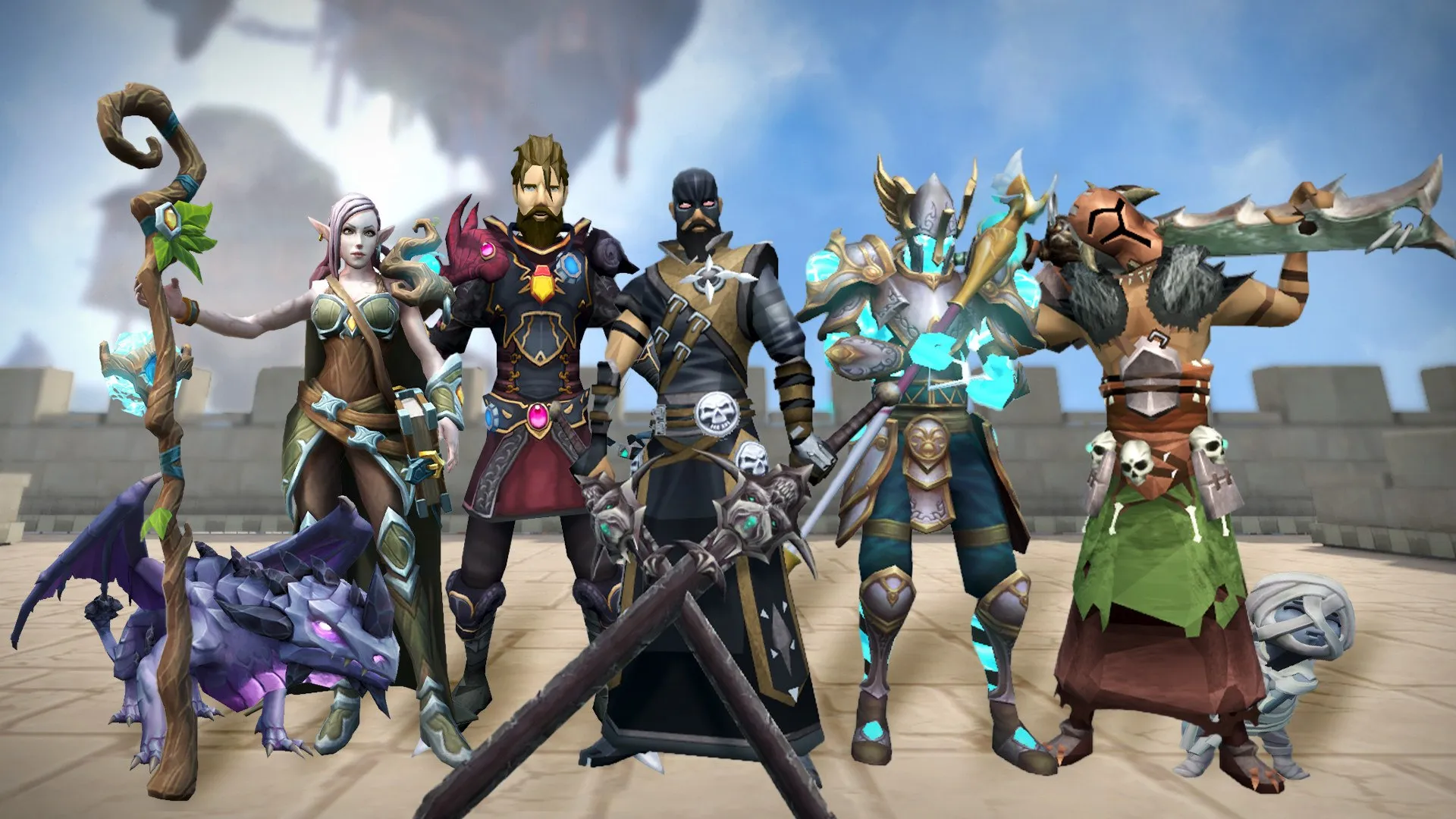
Phase 2 ends when you finish Recipe for Disaster and claim Barrows gloves, the best gloves an Iron can get for most of the account. Along the way you set up passive income (Miscellania, farm runs, bird houses), get graceful and 43 Prayer, and earn the early gear milestones: fire cape, fighter torso and dragon defender.
This is also the phase where daily routines start to beat raw XP rates. An Iron who does herb runs and bird houses every play session reaches Barrows gloves with a bank full of potions. An Iron who skips them reaches it with nothing to drink.
Managing Miscellania
Miscellania is a daily resource pump you set up once and fill with coins. After Throne of Miscellania, the kingdom’s workers gather herbs, maple logs, coal, fish or other resources and charge you from a coffer. After Royal Trouble the coffer holds up to 7.5 million coins and the kingdom spends up to 75,000 a day from it.
For most Irons, herbs are the best allocation because Herblore is the tightest bottleneck on the account. Keep your approval rating high by doing a few minutes of work on the islands when you visit, and keep enough in the coffer to last until your next visit. A full coffer is expensive early, so most players start small and increase it as thieving money comes in.
Farm runs, bird houses and the herb sack
Farm runs are the Ironman’s main source of herbs and therefore of potions. Fairy rings and the Ardougne cloak cover most patches. Bird houses on Fossil Island (after Bone Voyage) give passive Hunter XP and bird nests full of seeds every time you pass by.
The herb sack, from the Tithe Farm reward shop or the Slayer reward shop, stores grimy herbs and saves bank space and inventory slots on boss trips. Pair each farm run with a bird house run, and the two routines together take only a few minutes per session while feeding Herblore and seed stocks for weeks.
Diaries that pay off
Achievement diaries give Irons permanent shortcuts and bonuses that a main would buy around. The ones worth finishing early are the ones that save time on every trip.
- Ardougne Easy: cloak teleports to the Monastery and the nearby farm patch.
- Ardougne Medium: higher pickpocket success at Ardougne and a better cloak.
- Varrock Easy/Medium: better teleports and access to more shops.
- Lumbridge and Draynor: the Explorer’s ring, with free alchemy casts and run energy restores.
- Morytania Easy/Medium: the Morytania legs, which help with Barrows and Slayer in the region.
Combat gear milestones
The early combat milestones work as a set. Together they give you the best-in-slot items for a mid-level melee and range build, and every one of them can be farmed without the Grand Exchange.
| Item | Where | Requirement | Why an iron wants it |
|---|---|---|---|
| Fire cape | TzHaar Fight Cave | Clear 63 waves | Best melee cape before the Infernal cape |
| Fighter torso | Barbarian Assault | Honour points in all four roles | Strength bonus with no degradation, storable in the POH |
| Dragon defender | Warriors’ Guild basement | 130 combined Attack + Strength | Best off-hand for most mid-game melee |
| Imbued god cape | Mage Arena II | 75 Magic | Best magic cape for most content |
| Barrows gloves | Recipe for Disaster | Full quest series | Best all-round gloves until much later |
Barbarian Assault is a group minigame, so go with a team from your clan or the official Barbarian Assault friends chats. The OSRS Wiki’s Ultimate Ironman equipment page still calls the fighter torso the standard body piece for most players before Oathplate, which shows how long it stays useful.
Recipe for Disaster checklist
Recipe for Disaster is a series of subquests that ends with Barrows gloves, and the final fight against the Culinaromancer needs 175 quest points. The skill gates that slow Irons most are 70 Cooking and 48 Agility for the King Awowogei subquest, and the quest list includes Desert Treasure I, Monkey Madness I and Horror from the Deep.
A reliable order:
- Do the subquests with no hard requirements first (the Mountain Dwarf, Goblin generals, Pirate Pete and Lumbridge Guide).
- Finish Evil Dave and Skrach Uglogwee while you train Cooking.
- Free Sir Amik Varze once the quests he needs are done.
- Free King Awowogei after Monkey Madness I with 70 Cooking and 48 Agility.
- Hit 175 quest points, finish Desert Treasure I, then defeat the Culinaromancer.
- Buy Barrows gloves from the Culinaromancer’s Chest.
Our OSRS Recipe for Disaster quest guide with subquests walks through each fight in detail, including the gear an Iron can realistically bring at that stage.
Phase 3: Mid-Game Gear (Slayer or PvM Rush)
Phase 3 turns a quested account into a bossing account. The main gear sources here are Barrows, Moons of Peril, the Royal Titans, Tormented Demons and a handful of targeted drops: the zombie axe, Trident of the seas, abyssal whip and dragon warhammer. How you get them depends on one decision, Slayer first or a direct PvM rush.
Slayer vs PvM rush
Go Slayer if you enjoy variety and want herbs, runes and coins as side income. Rush PvM if you want specific gear quickly and plan to train Slayer later. Both paths reach the endgame, and the main difference is pacing.
Slayer’s strength for an Iron is its passive loot. Herb drops, rune drops and alchables add up quickly, and the reward shop gives the herb sack, the Slayer helmet and boss tasks. The abyssal whip (85 Slayer) and Trident of the seas from cave krakens (87 Slayer) sit on that path. The cost is time spent on tasks that give nothing you need.
The PvM rush targets gear directly. Lizardman shamans drop the dragon warhammer with no Slayer requirement. Armoured zombies give the zombie axe, a cheap mid-tier melee weapon. Barrows, Moons of Peril and the Royal Titans provide armour, weapons and prayer scrolls. A middle path works well in practice: train Slayer as your AFK-ish combat activity and break off for a target boss when a specific item would speed up everything else. Our OSRS Slayer guide for efficient training and profit covers which tasks to skip and block.
Phase 3 boss and gear targets
| Source | Key rewards | Main gate |
|---|---|---|
| Barrows | Barrows armour and weapons | Priest in Peril, good Prayer |
| Moons of Peril | Blood, Blue and Eclipse moon armour sets | Perilous Moons quest |
| Royal Titans | Deadeye and Mystic vigour prayer scrolls, Twinflame staff | Combat stats in the 70s+ |
| Tormented Demons | Burning claws and synapses for new weapons | While Guthix Sleeps |
| Lizardman shamans | Dragon warhammer | None beyond combat stats |
| Armoured zombies | Zombie axe | Defender of Varrock |
| Cave kraken | Trident of the seas | 87 Slayer |
The Royal Titans deserve a mention of their own. The OSRS Wiki’s Ironman guide lists the Deadeye and Mystic vigour prayer scrolls and the Twinflame staff among the mid-game upgrades they provide. Community guides note that the Titans are weak to crush, so bring your best crush weapon alongside a ranged option.
Herblore 81 and brews
Saradomin brews at 81 Herblore change what bosses an Iron can survive. Brews plus super restores let you fight long without banking, which is why every route pushes Herblore hard in the mid game. Each farm run and Miscellania herb shipment from Phase 2 counts toward this.
Plan the Saradomin brew chain early. Toadflax for the brews and snapdragon for super restores are both farm crops, so keep herb patches growing what you need for these potions rather than whatever seed you happen to have.
Fury and Zenyte path
The amulet of fury needs 90 Crafting (boostable from 85) to make the onyx amulet and 87 Magic to enchant it, according to the OSRS Wiki’s Ironman guide. It is a long goal, but one that lasts for years. Zenyte jewellery comes later from Demonic gorillas after Monkey Madness II and gives some of the best accessories in the game.
Phase 4: Song of the Elves, Corrupted Gauntlet and Raids
Phase 4 starts at Song of the Elves, which needs 70 in Agility, Construction, Farming, Herblore, Hunter, Mining, Smithing and Woodcutting and unlocks Prifddinas. The aim is a Bow of Faerdhinen from the Corrupted Gauntlet, then raids in an order that suits a self-sufficient account, ending with The Fractured Archive.
Song of the Elves is a big skilling wall, and that is deliberate. Each 70 helps elsewhere too: Construction for a better house, Farming for higher-tier herbs and trees, Smithing for Sailing parts and cannonballs. Spread the training across AFK sessions rather than grinding one skill at a time.
Corrupted Gauntlet for the Bowfa
The Corrupted Gauntlet is the key Ironman boss because you bring no gear into it. You gather and craft everything inside each run. That makes it the most fair and repeatable source of the Bow of Faerdhinen (80 Ranged and 70 Agility to wield) and the crystal armour seeds that complete its set bonus.
Expect a learning curve. Practice in the normal Gauntlet first, learn the Hunllef’s attack pattern and prayer switches, then move to Corrupted once kills are consistent. A Bowfa with crystal armour carries an Iron through a large share of content until the first raid uniques arrive.
Raids order for irons
Most Irons start raiding with Chambers of Xeric or Tombs of Amascut and leave Theatre of Blood for later, because it punishes mistakes most and is hardest to learn in a small team. Chambers of Xeric is solo-friendly with steady supplies and loot. Tombs of Amascut lets you set the difficulty with invocations, so you can raise it as your gear improves.
| Raid | Why an iron goes here | Typical timing |
|---|---|---|
| Chambers of Xeric | Solo-friendly, steady loot and prayer scrolls | Early raiding, after Bowfa |
| Tombs of Amascut | Difficulty scales through invocations | Early or alongside CoX |
| Theatre of Blood | Demanding team raid, strong uniques | After the first two |
| The Fractured Archive | Newest best-in-slot rewards | After While Guthix Sleeps and solid gear |
Bosses like Vorkath fill the gaps between raids and pay well enough to fund the expensive habits, such as runes for Thralls and charges for the Trident. Our OSRS Vorkath guide with gear, phases and fast kill tips and our OSRS Araxxor boss guide with gear, phases and drops cover two of the most popular options.
The Fractured Archive (Raids 4) readiness
The Fractured Archive is Old School RuneScape’s fourth raid, released on 20 October 2026, with eight new bosses and new best-in-slot rewards according to the OSRS Wiki. Access requires While Guthix Sleeps, the same quest that unlocks Tormented Demons, so an Iron who has reached Tormented Demons is already part of the way there.
While Guthix Sleeps needs 180 quest points, and quest guides list its highest skill requirement at 72 Thieving, with Magic, Agility, Farming and Herblore in the mid-to-high 60s. Check the quest page for the current numbers before you plan around them. The Fractured Archive miniquest starts on your first visit to the raid lobby.
The warning for Hardcore accounts is direct: ironman.guide’s boss list marks Raids 4 deaths as unsafe for both Hardcore Ironman and Hardcore Group Ironman. The raid is also still changing. The OSRS Wiki records that a mode planned for 11 November 2026 was postponed after critical bugs turned up in testing. Treat it as content for an account that is already geared and comfortable with long fights.
Hardcore Ironman Safety Checklist
A Hardcore Ironman survives by avoiding the few places where deaths really happen and by treating new content with caution. Most HCIM deaths come from small lapses: disconnects, low-HP skilling or rushing a boss before learning it.
- Learn the safe list. Safe minigames do not cost your status on Hardcore Ironman. They do cost a group life on Hardcore Group Ironman, so groups should treat every death as real.
- Respect Wintertodt early. Low Hitpoints plus brazier damage can kill you. Bring food and leave when you can’t heal.
- Treat new content as dangerous. When Sailing launched, Jagex advised players to avoid high-risk activity, including Hardcore Ironman play, while it watched for technical problems. Apply the same rule to any major update or new raid.
- Avoid the Wilderness until you have a plan. Player killers are the most avoidable HCIM death, and you can do most early progress without the Wilderness.
- Learn bosses at safe stages first. Watch the mechanics, practise in safe practice modes where they exist, and attempt real kills with an emergency teleport ready.
- Secure the account. Use an authenticator and a Jagex Account. A hijacked account can be killed on purpose.
- Never use Hardcore Worlds rules as your guide. That mode counts more deaths as unsafe than Hardcore Ironman, and the reverse mistake (assuming HCIM rules apply on Hardcore Worlds) ends characters.
F2P Ironman Path
Free-to-play Ironman works and has its own OSRS Wiki F2P Ironman guide, but it is a shorter, slower game. Sailing, Wintertodt, fairy rings, Hardcore Worlds and every raid are members-only, so the F2P route is about questing, combat training and the free-to-play bosses.
A condensed F2P route:
- Collect the Stronghold of Security coins.
- Complete the F2P quests for XP and quest points.
- Train combat on safe low-level targets, banking hides and drops for Crafting and money.
- Finish Dragon Slayer I to wear a rune platebody and green dragonhide.
- Fight Obor (giant key from hill giants), Bryophyta (mossy key from moss giants) and Brutus for F2P gear and coins.
F2P is a good way to learn Ironman habits before you pay for membership. Everything you train carries over once you subscribe, including through bonds you buy on the GE.
Common Ironman Mistakes and How to Fix Them
Most Iron accounts slow down because of a few planning mistakes, not because of slow XP rates. These are the ones that show up again and again in community threads.
- Choosing a mode in a hurry. Fix: decide before Tutorial Island and remember that you can only move down, never up.
- Mixing guides. Following two routes at once skips steps that each route expects you to have done. Pick one route and use the wiki for reference.
- Skipping daily routines. No farm runs early means no potions in the mid game. Do herbs and bird houses every session.
- Spending all money on Construction. Keep a reserve for Miscellania and shop runes.
- Ignoring Sailing. You lose run-energy-restoring travel and AFK income. Do the quests to Sailing 15 early.
- Rushing raids under-geared. Bowfa and crystal first, then raids, and The Fractured Archive last.
The expected result of avoiding these is an account that reaches Barrows gloves with full potion stocks and a working money loop, then moves into Song of the Elves without a long skilling detour.
Avoiding Ironman Burnout
Ironman burnout comes from long stretches of one grind with no visible reward. The fix is to pair one AFK activity with one active activity in each phase, so you always have something easy to do when you’re tired and something exciting when you’re sharp.
| Phase | AFK pairing | Active pairing |
|---|---|---|
| 1 | Fruit stalls, Wintertodt | Questing, fairy ring unlocks |
| 1-2 | Sailing salvaging | Barbarian Assault, Fight Cave |
| 2 | Bird houses, Miscellania | Recipe for Disaster subquests |
| 3 | Slayer tasks, salvaging | Moons of Peril, Royal Titans |
| 4 | Song of the Elves skill training | Corrupted Gauntlet, raids |
Leave the guide when a step stops feeling worth it. Every route assumes you play its way, but a guide that you abandon because it bores you is worse than a slower route you keep playing. Common reasons to deviate are an exciting boss your stats can already handle, a clan event or a goal that keeps you logging in.
Veteran's tip
Plan your planks and cannonballs before upgrading your ship, and spend the sawmill coupons from early Sailing quests and events on the hull and facility upgrades you’ll use most, so your logs go further.
FAQ
What is the best OSRS Ironman guide in 2026?
There is no single best route. Oziris’s route on ironman.guide suits players who want to boss soon, BRUHsailer suits efficient maxing through multi-questing, and the Mootrius guide on the OSRS Wiki suits players who want variety with Sailing built in. Use the OSRS Wiki’s Ironman guide alongside whichever one you choose.
Should I follow BRUHsailer or Oziris?
Follow BRUHsailer if you want to max efficiently and quest heavily. Follow Oziris if you want to reach bossing quickly and like a step checklist. Both get you to Barrows gloves. Neither is a bad choice, but switching between them midway causes missed steps.
How do I become an Ironman in OSRS?
Speak to the Ironman tutor on Tutorial Island before you leave and choose your mode. Group Ironman is set up through the group-creation process for new accounts. An existing normal account cannot become an Ironman.
Can you un-Ironman in OSRS?
Yes. You can drop Ironman status or move to a lower mode (for example from Hardcore or Ultimate to regular Ironman) through the Ironman tutors after Tutorial Island. It only works one way. You can never regain a higher mode.
Is Hardcore Worlds the same as Hardcore Ironman?
No. Hardcore Worlds, launched 4 November 2026, is a one-life, members-only mode for new characters on 32 worlds with its own economy. Trading and the Grand Exchange are allowed, and it uses the stricter Hardcore Group Ironman death rules.
What should an Ironman do first in OSRS?
Collect the Stronghold of Security coins, start the thieving ladder towards the Rogue’s outfit, do early quests for travel (Fairytale II for fairy rings, Ardougne Easy Diary for the cloak) and work towards 50 Firemaking for Wintertodt.
When should an Ironman start Sailing?
Early in Phase 1. Pandemonium and Prying Times (Sailing 12, 30 Smithing) are quick, and salvaging at 15 gives AFK income. Barracuda Trials at 30 is where XP rates pick up.
How do Ironmen make money in OSRS?
Early money comes from the Stronghold of Security, thieving with the Rogue’s outfit and quest rewards. Mid-game money comes from Sailing salvaging, Slayer drops, alching and bossing. Miscellania and farm runs supply resources instead of coins.
What is the quickest way to Barrows gloves on an Ironman?
Push quest points steadily from the start and train Cooking to 70 and Agility to 48 alongside it. Do the easy RFD subquests early, then finish Monkey Madness I, Desert Treasure I and Horror from the Deep before the Culinaromancer.
Is there an F2P Ironman guide?
Yes. The OSRS Wiki maintains a dedicated F2P Ironman guide. It covers F2P quests, Dragon Slayer I and the free-to-play bosses Obor, Bryophyta and Brutus.
Your Next Step
Your most important decision comes in the next ten minutes, before you leave Tutorial Island. After that, pick one route and start with the Stronghold of Security. Do the first Sailing quests in your first week, and judge your progress by milestones rather than total level. Quest Month runs through November, and the 2026-27 roadmap points to Menaphos and Dungeons of Gielinor for spring 2027. An Iron that reaches Barrows gloves this winter will be ready for whatever that brings.