Every good OSRS money maker comes down to three things: the levels you have, the quests you’ve unlocked, and how much attention you want to give the screen. This guide ranks 20 proven methods from a fresh level 3 account up to raid-ready mains. It also shows which unlocks pay off fastest, so your gold-per-hour keeps climbing as you level.
How We Ranked These Money Makers
Gold-per-hour figures in OSRS move constantly. One update can add a new drop source, a Grand Exchange price can crash overnight, and a popular method can get crowded until the margin disappears. For that reason this guide doesn’t print fixed hourly numbers. It sorts methods into profit tiers (low, medium, high, very high), and you should check current Grand Exchange prices before you commit hours to anything. The OSRS Wiki keeps a money making guide that recalculates estimates from live prices, which is the best place to confirm the current numbers.
Each method was judged on four things:
- Entry cost: the levels, quests and gear it takes to start.
- Profit tier: how it compares to other options at the same stage of an account.
- Attention: whether you can run it on a second screen or need full focus.
- Durability: whether the income holds up after updates, or relies on one volatile item.
The list runs in rough order of entry requirements. Method 1 works on a brand new account and method 20 needs a maxed-out combat setup and a team.
Our Top Pick: Herb Runs
If you pick only one money maker from this guide, make it farming herbs. Herb runs take a few minutes of active play, the seeds grow while you do other things, and the profit scales with your Farming level for the rest of the account’s life. Herbs take 80 minutes to grow, so you can fit several runs into a normal play session without changing what you planned to do.
Every other method on this list asks you to stop and do it. Herb runs pay you on top of whatever else you’re grinding, which is why they top the list.
Quick-Reference Comparison Table
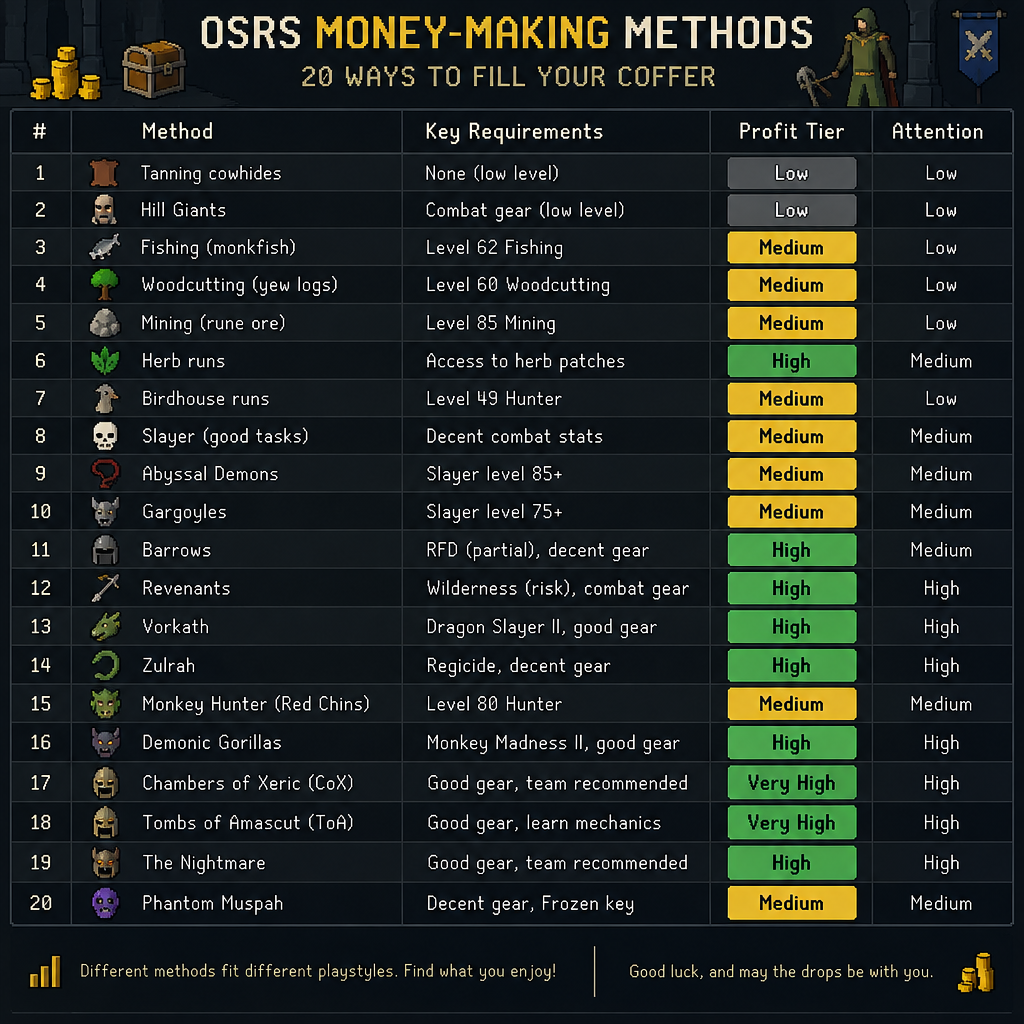
| # | Method | Key requirements | Profit tier | Attention |
|---|---|---|---|---|
| 1 | Tanning cowhides | None (F2P) | Low | Medium |
| 2 | Hill giants and Obor | Low combat (F2P) | Low | Medium |
| 3 | Daily shop buys | Diaries, quests | Low-medium | Very low |
| 4 | Birdhouse runs | 5 Hunter, 5 Crafting, Bone Voyage | Low-medium | Very low |
| 5 | Herb runs | 32 Farming for ranarr | Medium | Low |
| 6 | Guardians of the Rift | 27 Runecraft, Temple of the Eye | Low-medium | Medium |
| 7 | Barrows | Priest in Peril, mid combat | Medium | Medium |
| 8 | Hallowed Sepulchre | 52+ Agility, Sins of the Father | Medium-high | High |
| 9 | Moons of Peril | Varlamore access, mid combat | Medium | Medium |
| 10 | Red and black chinchompas | 63 / 73 Hunter | Medium-high | Medium |
| 11 | Herbiboar | 80 Hunter, 31 Herblore | Medium | Medium |
| 12 | Slayer (gargoyles and up) | 75+ Slayer | Medium | Medium |
| 13 | Blood runes | 77 Runecraft, Sins of the Father | Medium | Low |
| 14 | Pickpocketing vyres | 82 Thieving, Sins of the Father | Medium | Low |
| 15 | Demonic gorillas | Monkey Madness II | High | High |
| 16 | Zulrah | Partial Regicide | High | High |
| 17 | Vorkath | Dragon Slayer II | High | Medium |
| 18 | Corrupted Gauntlet | Song of the Elves | High | High |
| 19 | Desert Treasure II bosses | Desert Treasure II | Very high | High |
| 20 | Raids (CoX, ToB, ToA) | Endgame gear, team | Very high | High |
Early Game and Free-to-Play Money Making
A free account has limited options, and none of them are fast. Their real job is to fund your first Bonds or your first set of gear, and to teach you how the Grand Exchange buy limits work.
1. Tanning Cowhides
Kill cows near Lumbridge, collect the hides, then walk them to Ellis the tanner in Al Kharid. Ellis turns cowhide into soft leather for 1 coin or hard leather for 3 coins each. Selling leather instead of raw hides adds a little margin per item.
You can also skip the killing and buy hides from the Grand Exchange, tan them, and sell. This works only when the price gap between hide and leather beats the tanning fee, so check before you buy a full inventory.
It’s slow. It’s also the cleanest way to learn the loop of buy, process and sell that runs through half the methods below.
2. Hill Giants and Obor
Hill giants in the Edgeville Dungeon drop big bones, which always sell. They also drop giant keys that open Obor’s lair, a free-to-play boss with a better loot table than anything else you can reach at low combat.
This is the method for a new F2P account that needs both combat XP and spending money. You’ll level Attack, Strength and Defence while you earn, which pays off later.
Heads up
The Grand Exchange applies a sales tax that Jagex has adjusted in the past. On thin-margin methods like tanning or flipping, factor the tax in before you assume a profit.
Members Passive Income: The Daily Stack
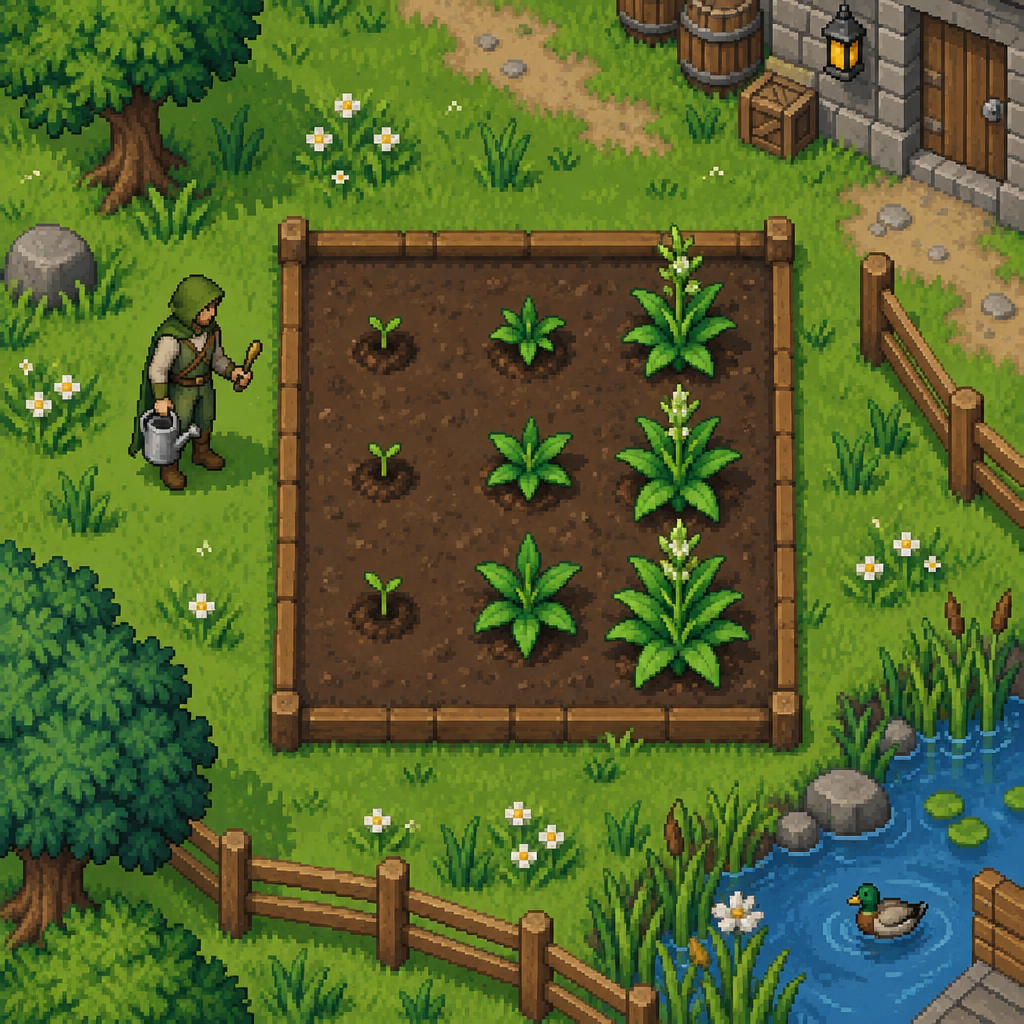
These methods earn less per run, but they take minutes and stack together. Many long-time players run all of them every day without thinking about it. Once these habits are set up, your bank grows even on days you barely play.
3. Daily Shop Buys
Several NPCs sell or give you items at fixed prices, with a daily or achievement-gated allowance. The margin per item is small. You’re trading a minute of your time for guaranteed gold.
- Bert’s sand: after The Hand in the Sand, Bert in Yanille gives you 84 buckets of sand daily.
- Zaff’s battlestaves: the Varrock Achievement Diary unlocks discounted battlestaves from Zaff each day. The allowance grows with each diary tier, peaking at the elite tier.
- Kingdom of Miscellania: finish Throne of Miscellania and you can fund a workforce that gathers resources while you’re offline. Royal Trouble improves the yield. Keep your approval rating up by checking in.
4. Birdhouse Runs
Birdhouses on Fossil Island need just 5 Hunter, 5 Crafting and the Bone Voyage quest. You place four birdhouses, add seeds, and come back in 50 minutes. Each house fills with bird nests, seeds and Hunter XP.
The money comes mostly from nests that contain tree and fruit tree seeds. A run takes a few minutes once you have the routine down. It also levels Hunter passively, which feeds into chinchompas and Herbiboar later.
Quick steps: your first birdhouse run
- Finish Bone Voyage to unlock Fossil Island.
- Make four birdhouses with logs, a hammer and a chisel.
- Bring seeds such as hops or barley to bait them.
- Place all four on Verdant Valley and Mushroom Meadow.
- Return after 50 minutes to collect and rebuild.
5. Herb Runs (Top Pick)
Herb runs are the backbone of passive money making in OSRS. Plant herb seeds across every herb patch you can reach, come back after 80 minutes, and sell the grimy herbs or clean them for Herblore. Ranarr unlocks at 32 Farming, toadflax at 38, snapdragon at 62 and torstol at 85. The best seed to plant changes with the market, so compare seed costs with herb prices before each batch.
Core patches include Falador, Catherby, Ardougne, Port Phasmatys and Hosidius. The Troll Stronghold patch (from My Arm’s Big Adventure) is disease-free, as is the one on Weiss. Harmony Island and the Farming Guild (65 Farming) add more patches later. Every new patch adds income to every future run.
Veteran's tip
Ultracompost and the magic secateurs (from Fairytale I) both raise your herb yield. Get them early. They pay for themselves within a handful of runs, and every new patch you unlock multiplies the gain.
Mid-Level Methods
Once you have some combat stats and a few mid-tier quests done, real money-making options open up. This is where your choices start to shape the account.
6. Guardians of the Rift
This Runecraft minigame needs 27 Runecraft and the Temple of the Eye quest. You get Runecraft XP faster than most methods at this level, plus runes and a reward shop with tradeable items. The gold is modest, but you’re training a slow skill and getting paid for it.
Use it as the bridge to blood runes (method 13). Every level you gain here brings you closer to one of the most relaxed money makers in the game.
7. Barrows
Barrows has been a mid-level money maker since the original 2007 game. You fight the six Barrows brothers in Morytania, then loot a chest that can contain runes, bolt racks, coins and pieces of Barrows armour and weapons. Access requires Priest in Peril.
It’s a good fit for mid-combat accounts with decent Magic. Each brother is weak to a specific style, so you’ll learn gear switching without the punishing mechanics of later bosses. Barrows armour prices have drifted over the years, so check the market before you count on a big payday.
8. Hallowed Sepulchre
The Hallowed Sepulchre in Darkmeyer is an agility course full of traps, with loot chests and coffins at the end of each floor. You need 52 Agility to enter and Sins of the Father to reach Darkmeyer. Each deeper floor needs more Agility, and the best floors need 92 Agility.
Profit and XP both rise sharply on the higher floors. The loot table includes coins, hallowed marks and rare drops such as the ring of endurance. This method needs full focus, since mistakes cost time and health, but it’s one of the best ways to train Agility for money.
9. Moons of Peril
The Perilous Moons sit in Varlamore, which arrived in March 2024. You fight three bosses (Blood Moon, Blue Moon and Eclipse Moon) and then open a reward chest. The armour sets these bosses drop are useful for mid-level players, and the supplies you collect inside keep costs low.
For mid-level accounts it’s a strong option, especially if you want boss practice without an expensive gear setup.
10. Red and Black Chinchompas
Red chinchompas need 63 Hunter. Black chinchompas need 73 Hunter and live in the Wilderness. Both are caught with box traps, and players buy them in bulk for Ranged training. That keeps demand steady.
Black chins pay more because of the risk. Player killers patrol the hunting grounds, so bring only what you’re willing to lose and bank often. Red chins are the safer option and still a solid return.
Heads up
Any Wilderness method, including black chinchompas and revenants, puts your carried items at risk from other players. Never risk more than you can afford to lose, and keep account security tight with an authenticator.
11. Herbiboar
Herbiboar on Fossil Island requires 80 Hunter and 31 Herblore. You follow a tracking trail, find the boar and harvest a batch of herbs. It’s a calm loop with steady Hunter XP, and the herb haul gives good value.
It also stacks well with your birdhouse runs, since both use Fossil Island. Do both on the same visit.
High-Level Skilling Money Makers
These are the methods for players with high skill levels who want gold without bossing. Several are very AFK, which makes them a good fit for a second monitor or a long evening.
12. Slayer
Slayer becomes a money maker from about 75 Slayer, when gargoyles unlock (you’ll need a rock hammer to finish them). Abyssal demons follow at 85, Kraken at 87, Cerberus at 91, Araxxor at 92, the Thermonuclear smoke devil at 93 and Alchemical Hydra at 95.
Not every task pays well, so use Slayer points to block or skip the worst ones. Over time, your average gold per task will climb.
13. Blood Runes
Blood runes need 77 Runecraft. You can craft them at the True Blood Altar near Darkmeyer (needs Sins of the Father) using pure essence, or at the Arceuus dark altar using dense essence blocks. The Arceuus route is extremely AFK and costs nothing in essence.
The margin is steady rather than spectacular. You also get good Runecraft XP, which makes the slow climb to wrath runes easier.
14. Pickpocketing Vyres
With 82 Thieving and Sins of the Father, you can pickpocket vyres in Darkmeyer while wearing vyre noble clothing so they don’t attack you. The loot includes coins and runes, plus a rare blood shard, which makes the amulet of blood fury.
It’s a relaxed, low-effort method with a jackpot drop on top. Combined with blood runes and the Sepulchre, it’s one of three reasons Sins of the Father is worth finishing.
High-Level Combat Money Makers
These are the methods that build bank balances into the billions over time. They need gear, practice and quest unlocks. They also pay far better than anything above.
15. Demonic Gorillas
Demonic gorillas need Monkey Madness II, and they switch protection prayers based on your attacks. You need to swap styles mid-fight. The draw is the zenyte shard drop, which makes some of the best jewellery in the game.
They’re a solid test of gear switching before you try Zulrah or Vorkath.
16. Zulrah
Zulrah needs partial completion of Regicide. The snake boss rotates through set phases and forms, so once you’ve learned them, the fight is predictable. Uniques include the tanzanite fang, magic fang, serpentine visage and onyx, plus Zulrah’s scales on every kill.
It’s a high-attention fight. Expect a few deaths while you learn the rotations, but the payoff is worth it.
17. Vorkath
Vorkath needs Dragon Slayer II and is the classic “learn once, farm forever” boss. Every kill drops superior dragon bones and blue dragonhide, so even a dry streak pays. Rarer drops include Vorkath’s head, the dragonbone necklace, the draconic visage and the skeletal visage.
Once you’ve learned the acid and fireball phases, Vorkath becomes very consistent. A lot of mains use it as their main income source for years.
18. Corrupted Gauntlet
The Gauntlet in Prifddinas requires Song of the Elves, a grandmaster quest with steep skill requirements. You enter with nothing, gather and craft your own gear, then fight the Hunllef. The corrupted version is harder and pays better, and the enhanced weapon seed is the big drop.
There’s no gear to lose, which makes it popular even with players who don’t have expensive equipment. It’s mostly a skill check.
19. Desert Treasure II Bosses
Desert Treasure II added four bosses: Duke Sucellus, the Leviathan, Vardorvis and the Whisperer. Each drops vestiges, chromium ingots used to make upgraded rings, and other high-value uniques. Awakened versions are harder and have better rates for some drops.
These need strong gear and solid mechanical play. For players at that level, they’re some of the best solo money in the game.
20. Raids: Chambers of Xeric, Theatre of Blood and Tombs of Amascut
Raids sit at the top of the list for both profit and difficulty. Chambers of Xeric can drop the twisted bow, Theatre of Blood can drop the Scythe of Vitur, and Tombs of Amascut can drop Tumeken’s shadow and Osmumten’s fang. Tombs of Amascut uses invocations, which let you scale difficulty to match your team.
The gold comes in big, rare lumps rather than steady chunks. Treat raids as a long-term commitment and track your average loot over many runs, not your last few.
Honorable Mentions
Several methods just missed the ranked list but still deserve a place in your rotation.
- High Alchemy: 55 Magic turns many items into coins. It’s mostly an XP method with a small margin, but it gives you a guaranteed exit for drops.
- Plank Make: 86 Magic and Dream Mentor give you the Lunar spell that turns logs into planks. Good if you’re already training Magic.
- Amethyst mining: 92 Mining. Very AFK, and the amethyst is used to make arrows, bolts and darts that stay in demand.
- Wrath runes: 95 Runecraft and Dragon Slayer II. One of the strongest skilling money makers for maxed Runecrafters.
- Air battlestaves: 66 Crafting. Combine Zaff’s daily staves with air orbs for a dependable margin.
- Flipping (merching): buying low and selling high on the Grand Exchange. It works, but it takes market knowledge, capital and patience, and the sales tax eats into thin margins.
The Best AFK Money Making Methods in OSRS
If you want gold with minimal attention, these are the strongest picks:
| Method | Requirements | AFK rating |
|---|---|---|
| Arceuus blood runes | 77 Runecraft | Very high |
| Amethyst mining | 92 Mining | Very high |
| Vyre pickpocketing | 82 Thieving | High |
| Birdhouse and herb runs | Low levels | Short active, long idle |
| Kingdom of Miscellania | Throne of Miscellania | Fully passive |
The trade-off is simple. More AFK methods usually mean lower gold per hour. They make sense for players who’d rather earn something steady while they watch a stream than grind a boss for hours.
Unlock Paths That Pay Off Most
This is the part most money making guides skip. A handful of quests open several methods at once, so finishing them is often worth more than gaining another level.
- Sins of the Father: unlocks vyre pickpocketing, the True Blood Altar and the Hallowed Sepulchre. Three methods across three skills.
- Bone Voyage: opens Fossil Island for birdhouses and, later, Herbiboar.
- Dragon Slayer II: unlocks Vorkath and the wrath altar, covering both high-level combat and skilling money.
- Song of the Elves: unlocks Prifddinas for the Gauntlet and high-level Thieving.
- Desert Treasure II: unlocks four bosses with strong loot tables.
Veteran's tip
Plan your quest order around money unlocks, not just XP rewards. A main that rushes Sins of the Father and Dragon Slayer II will out-earn one that’s ten combat levels higher but missing both quests.
Paying for Membership With GP
Old School Bonds let you turn in-game gold into membership. Each Bond gives 14 days of membership, and they’re bought and sold on the Grand Exchange like any other item. The Bond price changes with demand, so check the current rate before you budget.
Once your daily stack and one mid-level method are running, covering membership with gold is realistic for most players. That makes the methods above even more valuable, since you’re effectively playing for free.
Heads up
Nobody in the game will double your money. “Doubling” offers, fake trade bots and “drop party” invitations are all scams designed to steal your items. Jagex staff never ask for your password or your bank.
Final Thoughts
The best approach to OSRS money making is layering. Set up birdhouse runs, herb runs and daily shop buys early, since they cost you minutes and pay out forever. Pick one active method that suits your levels and keep it running. Then plan your quests around the unlocks that open several methods at once.
Ironman accounts can use most of these methods for supplies and gear, but they can’t buy or sell regular items on the Grand Exchange (they can only buy bonds through a special Ironman interface), so treat the gold estimates as irrelevant and focus on the resources instead.
FAQ
What is the best money making method in OSRS?
For most accounts, herb runs give the best return for the time spent, since they take minutes and keep earning while you do other things. At the very top end, raids and Desert Treasure II bosses earn the most per hour, but they need endgame gear and practice.
What’s the best money making method for beginners?
On a free account, tanning cowhides and killing hill giants (with Obor for bonus loot) are the most reliable starts. On a members account, start birdhouse runs and herb runs as soon as you can. They need very low levels and set up passive income early.
How do I make money in OSRS free to play?
Free-to-play options are limited. Tanning cowhides, killing hill giants for big bones and keys, and later Obor and Bryophyta are the standard picks. Most F2P players use these to buy their first Bond and move to members.
What are the best AFK money makers in OSRS?
Blood runes at the Arceuus altar (77 Runecraft), amethyst mining (92 Mining) and vyre pickpocketing (82 Thieving) are the most AFK. The Kingdom of Miscellania is fully passive once it’s set up.
Can I pay for OSRS membership with gold?
Yes. Old School Bonds give 14 days of membership and can be bought with in-game gold on the Grand Exchange. The price changes with demand, so check it before you plan around it.
Why don’t you list exact GP per hour?
Grand Exchange prices change constantly, and a single update can shift a method’s profit overnight. The profit tiers in this guide show how methods compare. For current hourly figures, check live prices or the OSRS Wiki’s money making guide before you commit.